ARCHIVED WRITING
Benjamin Un-Buttoned
How to Not Waste Your Life
Free to read
-----/////-----
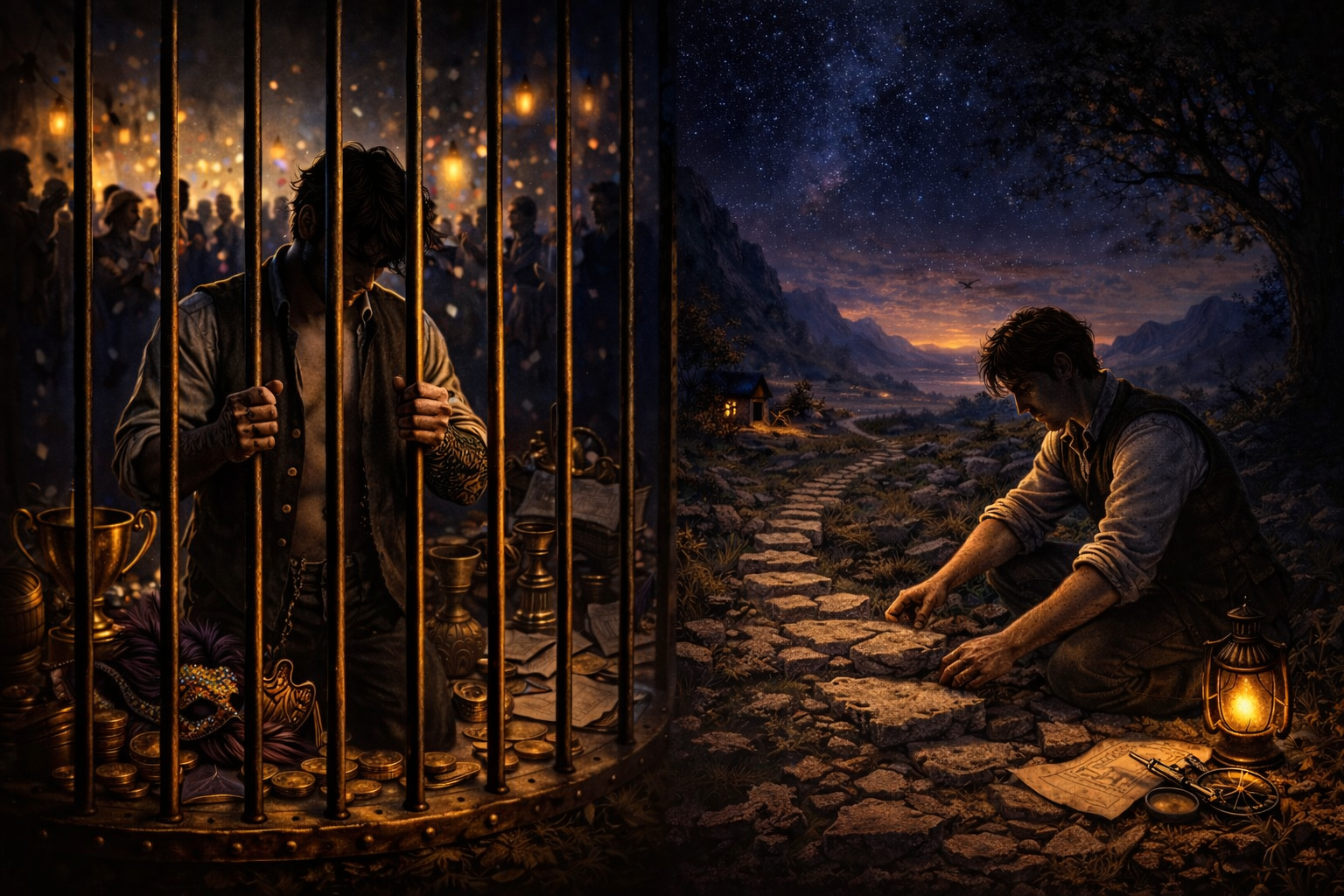
There were two siblings in the same house, raised under the same roof, eating from the same pantry, hearing the same storms tap the same windows.
One spent life like loose change.
If something glittered, they reached for it. If a room applauded, they stayed in it. If a path looked crowded, they assumed it must be leading somewhere worth going. They collected invitations, opinions, clothes, habits, half-friends, borrowed ambitions, and eventually a calendar so full it looked important from across the room.
And for a while, it worked.
They were easy to like. Easy to find. Easy to call successful if your standards were made of glass and overhead lighting.
The other sibling was harder to explain.
They hesitated. They disappointed people early. They said no without always having a better yes ready. They looked behind when others looked ahead. While one sibling was filling their arms, the other kept setting things down.
At first, this looked like failure.
One was in motion. The other was in thought.
One was becoming someone quickly. The other was taking forever to decide who that someone should be.
— People love speed when they do not have to live with the direction.
Years passed.
The first sibling built a life the way hurried people fill a shopping cart: quickly, emotionally, and with very little interest in what would be hard to carry home. They chose work that paid in praise and cost in peace. They kept people who made them feel visible but not known. They bought things to reward themselves for enduring a life they had quietly designed around other people’s eyes.
Nothing in their life was fake, exactly.
It was worse than fake.
— It was unexamined.
The second sibling was slower. Less decorated. Less obvious. They lost years, according to people who mistake patience for delay. They changed course more than once. They outgrew rooms before they had a new one to stand in. They looked uncertain so often that others assumed they were weak.
But they were doing a rarer thing.
They were working backward.
Before choosing what to hold, they asked what they wanted left in their hands.
Before choosing who to impress, they asked who they wanted beside their bed when life got ugly.
Before choosing work, they asked what kind of tiredness they could respect.
Before choosing a self, they asked what kind of person would still make sense when beauty thinned, when applause wandered off, when the market changed its mind, when the mirror stopped negotiating.
That is the part most people skip.
They build from appetite instead of ending.
They live from impulse instead of architecture.
Then one day they look around at the life they made and realize they have been hauling bricks for a building they do not even want to stand inside.
The first sibling woke up to this late.
Not tragically late. Just expensively late.
That is how waste usually works. It rarely arrives dressed like disaster. It arrives dressed like momentum. Like options. Like fun. Like keeping your doors open. Like being wanted. Like “I’ll figure it out later.”
Later is a storage shed full of unlabeled boxes.
The second sibling did not avoid pain. Let’s not get cute.
They were lonely sometimes. Doubt sat with them often. They looked boring to people who were addicted to noise. They had to watch others surge ahead in ways that made patience feel like a bad investment.
But time, that old bookkeeper, is ruthless and fair.
The first sibling had built for reaction.
The second had built for residue.
And residue matters.
When the lights dim, when the crowd thins, when the body slows, when the day asks what was actually done here, residue is what answers. Not charm. Not trend. Not the temporary electricity of being seen.
What remains.
What holds.
What outlives the mood that made the choice.
That is how not to waste your life.
You do not start at step one.
You start at the end.
Not in some gloomy way. Not with black robes and candle wax and a lecture about death. I mean plainly. Like a builder with a blueprint. Like a craftsman turning over the finished chair and studying the joints. Like someone honest enough to ask: when I am gone, what will it have turned out that I was making?
A home?
A mask?
A pile?
A life?
Most people waste years because they never ask the final question until they are buried under intermediate answers.
The sibling who grabbed every shiny thing was not foolish because they wanted joy.
— They were foolish because they never priced the shine.
The sibling who moved slower was not wise because they suffered.
They were wise because they measured.
That is the trick, if there is one.
Not to become grim.
Not to become perfect.
Not to stop laughing or wandering or changing your mind.
Just to stop building forward from every appetite that knocks on your door.
Some invitations are invoices.
Some rewards are rentals.
Some versions of happiness are just well-decorated waste.
So I think a decent life is built the old way.
You picture what should still be standing after the weather. Then you build toward that. You let the ending teach the beginning. You choose what you can carry for a long time. You become harder to impress and easier to fulfill.
You spend less of your life getting un-buttoned by every passing hand.
And if you do it right, maybe the people who knew you will not say you had everything.
Maybe they will say something better.
They will say you knew what to keep.
-----/////-----
End.
tc.forseti
Free to read here. Free access does not by itself release this work or its artwork for republication.