ARCHIVED WRITING
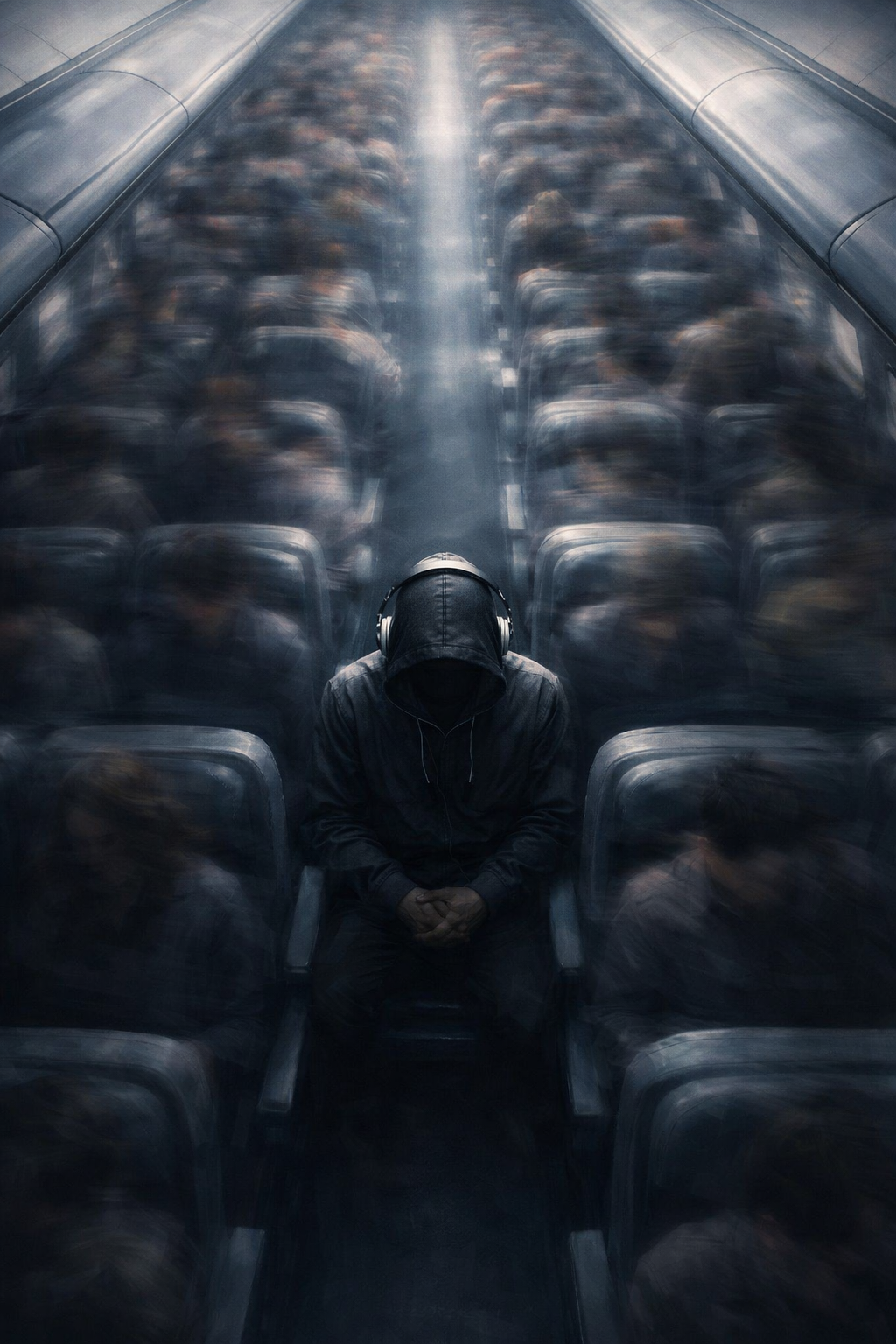
Cabin Pressure
The Assigned Seating Illusion
Free to read
-----/////-----
I learned very young that a plane will tell you a lot about people.
Not because air travel is profound. Most of it is stale air, quiet fear, and somebody acting like a delayed boarding group is an act of war. But put enough strangers in a metal tube and start removing their preferences one by one, and the truth starts sweating through.
I used to fly alone as a kid. Seven or eight years old, crossing long distances with too many stops, too many temporary adults. Different cities. Different flights. Different rows. Different faces. Same basic lesson.
Nobody asks what seat they want before they get here.
Some people are born into first class. Some get dropped in the middle seat with a bad elbow war before they even know what an armrest is. Some get legroom. Some get turbulence. Some have one clean direct flight. Some have layovers stacked on layovers, missed connections, delays, reroutes, and the slow realization that this trip is going to take more out of them than it seems to take out of everybody else.
Some people are carrying a backpack and a book.
Some are dragging luggage that should have been split between three adults.
Some people have working wifi. Some do not. And anybody who has flown recently knows how quickly people start unraveling when the little false promise of connection disappears. Strange, how furious we can get over not having access to something we never built in the first place.
Even the adults around you are assigned at random. Calm, cruel, loud, kind, impatient, selfish, generous, drunk, sick, attentive, absent. When you are a kid on a plane, especially by yourself, you notice this quickly. You notice who smiles without needing anything back. You notice who treats staff like furniture. You notice who acts like inconvenience is oppression. You notice who helps somebody with a bag and who suddenly cannot see three feet in front of their face when help is needed.
You also notice something else.
The structure stays the same, but the characters keep changing.
That stuck with me.
Different flight, same overhead compartments. Different destination, same seatbelt sign. Different row, same scramble for space. Different people, same little tests of character. Who takes more than they need. Who makes their discomfort everybody else’s problem. Who absorbs a rough patch without becoming one.
As I got older, that stopped feeling like air travel and started feeling like life.
Because I did not wake up and choose my face, my wiring, my family, my biology, my first language, my fear pattern, my nervous system, or the thousand hidden variables that shaped my starting line. Neither did you.
The difference between me and anyone else begins, in many ways, with a lottery neither of us authorized.
So no, I will not judge people for what they did not choose.
I save judgment for what people do with what they are handed.
For cruelty. For cowardice dressed as virtue. For dishonesty. For theft. For domination. For the repeated decision to harm when other roads still existed.
Origin is not the measure. Conduct is.
That matters to me because I have seen how lazy people get with judgment. They look at somebody’s row and think they understand the whole flight. They see one seat assignment and build a courtroom out of it. Window or aisle. First class or coach. Too loud. Too quiet. Too polished. Too rough. Too nervous. Too heavy. Too sharp. Too different. As if a glance at somebody’s boarding pass tells you what their trip has cost them.
It does not.
You do not know how many stops they had before they got here.
You do not know what they were forced to check below deck because there was no room left overhead.
You do not know what kind of weather they flew through.
You do not know if they have been white-knuckling turbulence for ten straight years while trying not to spill it into the lap of the person beside them.
And that still does not mean anything goes.
That is the part people keep butchering.
Context matters. It is not a pardon.
Compassion matters. It is not blindness.
I am not saying behavior should be excused because circumstances were difficult. I am saying judgment should be aimed with more precision than a drunk man throwing luggage off a carousel.
A middle seat is not a moral failure.
A rough departure is not a character flaw.
A delayed flight is not an indictment.
But how you treat the people trapped in the cabin with you? That tells me plenty.
Do you use your discomfort as permission to become cruel?
Do you turn your pain into policy for everyone within reach?
Do you keep elbowing strangers and then call it honesty?
Do you make the cabin smaller, meaner, harder to breathe in?
Or do you carry your part without needing applause for it?
Do you make room when room is scarce?
Do you help when the bag is obviously too heavy?
Do you tell the truth when it would be easier to perform innocence?
Do you try, however imperfectly, not to become additional turbulence?
That is where my judgment lives.
Not in what was assigned.
In what was done with it.
Maybe I learned that because I was young when I learned to travel alone. Maybe because when you are a kid moving through airports, you understand early that adults mistake appearance for explanation all the time. They think confidence means safety. They think size means strength. They think silence means ease. They think polish means health. They think one smooth sentence tells them what kind of flight somebody has had.
It does not.
Some people have been in the air a very long time.
So I do not care much where someone started. I care what they do once the cabin doors close.
That feels closer to justice than most of what passes for judgment now.
Not softer. Cleaner.
The seat was assigned.
The behavior was not.
-----/////-----
End.
tc.forseti
Free to read here. Free access does not by itself release this work or its artwork for republication.