-----/////-----
I used to think revelation lived somewhere else.
Not nowhere specific. Just elsewhere. Beyond the horizon. At the end of a flight. Inside some ancient city, some holy ruin, some impossible landscape that had already survived empires, weather, theft, worship, photography, and the exhausted awe of millions of visitors before me. I thought maybe if I stood in the right place long enough, some sealed chamber inside me would finally open. I thought maybe beauty, if it was large enough, old enough, sacred enough, would finish the work for me.
And to be fair, it does something.
The world is generous like that. A mountain can rearrange your breathing. The ocean can make your private dramas look small enough to fit in a coat pocket. A cathedral can remind you that human beings once knew how to build as if they would answer for it. A desert can strip language down to bone. A ruin can put its hand on your shoulder without speaking and still say, with unbearable clarity, you are not the first to suffer, and you are not the first to seek.
That matters.
I do not sneer at wonder. I do not think the old places are hollow because they are known. They are known because they are real. They have survived precisely because they strike something older than opinion. People do not cross oceans for what is empty. They cross oceans for what still hums.
But I started to notice something uncomfortable in myself.
I could be stirred without being changed.
I could stand before something vast and historic and beautiful and feel the machinery inside me begin to turn, feel desire wake up, feel hunger sharpen, feel some sleeping province in me begin to glow, and still walk away unresolved. Not disappointed. Not unmoved. Just unfinished. As if I had brushed against a door that was meant to open inward, and instead I had only admired its carvings from the public side.
That was the distinction I had missed for a long time.
There is a difference between being awakened and being altered.
The world can awaken you with terrifying efficiency. Sometimes all it takes is light hitting stone at the right hour. Sometimes it is wind over water. Sometimes it is reading a sentence written by a dead man and realizing, with the kind of quiet that almost hurts, that someone you have never met somehow reached into your century and touched your throat. Wonder is not rare. It is one of the last democratic experiences left to us. Crowds can still feel it together. Masses can still stand under the same sky and go silent for the same reason.
But discovery is not so communal.
That was harder for me to admit, because it forced me to stop romanticizing inspiration as completion. It forced me to see that I had been confusing proximity with possession. I thought that if I got close enough to greatness, some of it would transfer by osmosis. Stand near enough to mystery, and maybe mystery adopts you. Read enough brilliant people, and maybe brilliance becomes contagious. Walk the roads of the transformed, and maybe transformation becomes a kind of atmospheric condition.
It does not.
You can inherit wonder. You cannot inherit discovery.
That has been one of the least comfortable and most useful things I have ever learned.
Books taught me that. Not by failing me, but by taking me as far as they could. A good book is a miracle. It can hand you language for an ache you thought was shapeless. It can rescue you from vagueness. It can show you that your private storms have weather patterns. It can sharpen your sight. It can drag you out of your own cheap myths and force you into cleaner territory. It can save years of stupidity. It can make you less lonely. In a decent hour, it can feel like a flare fired from another life.
But even the best book is still a map someone else drew after surviving a landscape you have not crossed yet.
And maps are holy, but they are not the land.
I found beautiful places in other people’s pages. I found language, frames, warnings, doors, names for beasts, names for virtues, names for fractures, names for the old ache of being alive and awake at the same time. I found routes. I found tools. I found company. What I did not find was my own footprint.
That part cannot be borrowed.
At some point, if you want to find anything that is not merely well-described, you have to stop walking only where others have already built the path. That does not mean becoming arrogant. It does not mean pretending the old wisdom is beneath you. That would just be another costume for insecurity. It means understanding that reverence and originality are not enemies. It means being humble enough to learn from those who came before you, and brave enough to keep going when their road ends.
That is where the real search begins.
Not in rebellion for its own sake. That is adolescent theater. Not in the performance of uniqueness either, which is just conformity wearing more jewelry. I mean the quieter, less glamorous thing. The private willingness to keep looking after the known places have stopped yielding anything except admiration.
That is what I mean by an internal odyssey.
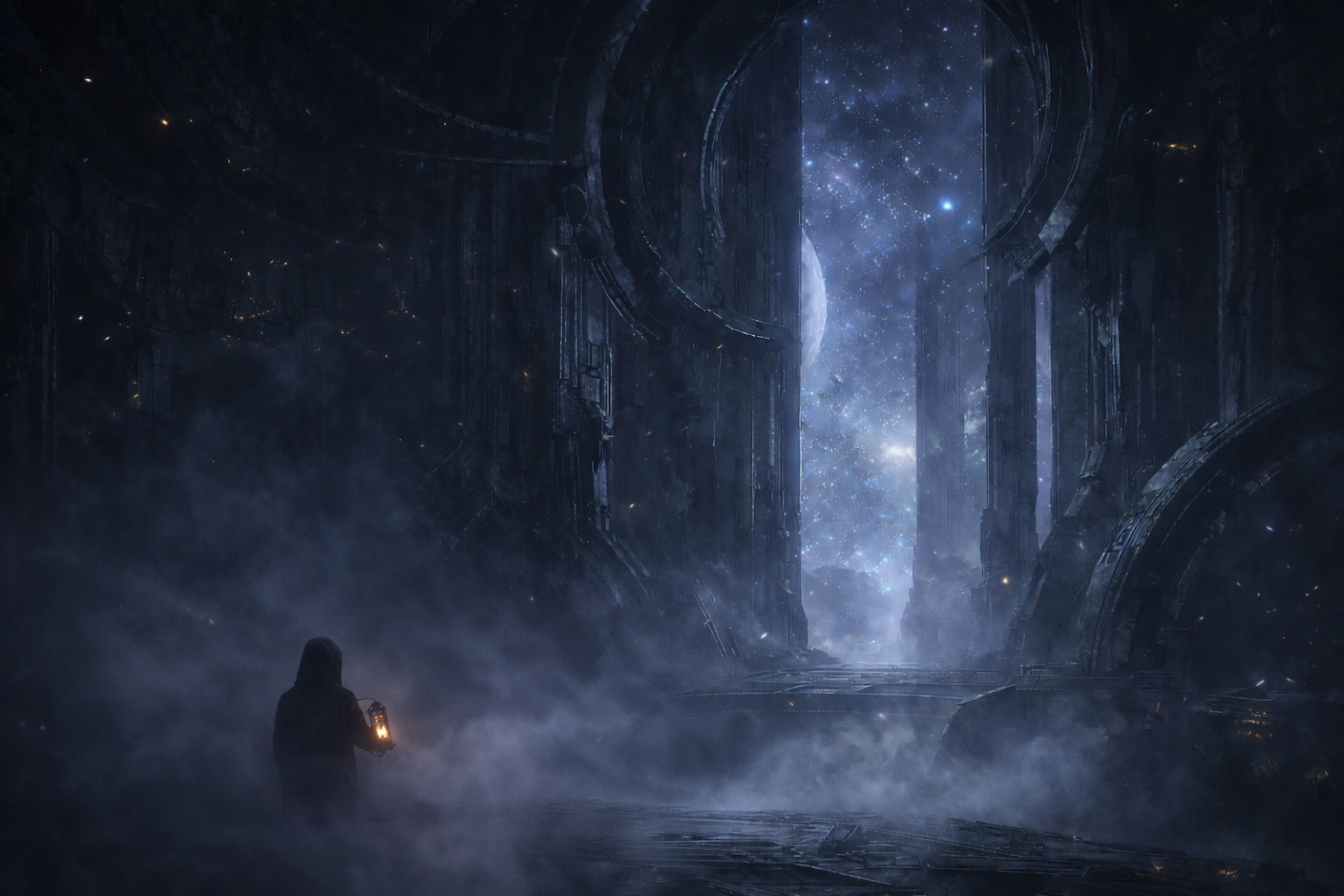
Not self-obsession. Not navel-gazing with a better vocabulary. Not the endless curation of feelings as if every passing mood deserves a museum wing. I mean the act of turning inward with the same seriousness people once reserved for oceans. I mean treating consciousness like terrain rather than decoration. I mean understanding that the mind is not a waiting room for opinions but a wilderness with weather, fault lines, sinkholes, hidden rivers, feral gardens, abandoned temples, and whole provinces that remain dark simply because nobody ever went there with a lantern and enough nerve to stay.
Most people, I think, approach themselves the way tourists approach famous cities. They hit the landmarks. They take the approved routes. They collect the expected emotions. They leave with photographs of places they never actually entered.
I did that too.
I went where the world told me meaning lived. I thought the well-lit places would tell me everything. I thought the greatest ideas would come from the most sanctioned shelves. I thought truth would be waiting in the places that had already been stamped important by history, academia, popularity, prestige, consensus, or sheer repetition. And some truth was there, of course. Plenty of it. Enough to keep me fed for years.
But I started to notice that the most alive moments were happening elsewhere.
They happened when I followed a thought past the point where it remained socially useful.
They happened when I sat with a contradiction long enough for it to stop feeling like failure and start feeling like a hidden passage.
They happened when I stopped reading purely for agreement and started reading as if I were prospecting, looking not for a doctrine to join, but for ore hidden inside strange terrain.
They happened when I took my own questions seriously enough to let them inconvenience me.
That is an underrated threshold. Inconvenience.
People like the idea of discovery much more than the conditions required for it. They like the image of revelation. They do not like wandering without a guarantee. They like to imagine that creativity arrives like lightning, all theater and voltage, some heavenly favoritism granted to a selected few with exotic damage and better cheekbones. But what I have found is far less romantic and far more hopeful.
Creativity is not a lightning bolt.
It is a search pattern.
It is what happens when you become willing to shake every tree, turn over every stone, crawl through root systems other people stepped over, and keep going when nothing immediately gleams back at you. It is not magic in the childish sense. It is disciplined curiosity with dirt under its nails. It is pattern recognition married to patience. It is an appetite for what has not yet been sorted. It is the refusal to confuse the famous with the exhaustive.
That changed my life, because it meant I no longer had to wait to be chosen.
I did not need Zeus to throw a spark into my skull. I needed stamina. I needed honesty. I needed the willingness to look where I had not looked before, and to keep looking after the borrowed language ran out. I needed to stop asking where everyone else had found meaning and start asking what remained undiscovered because everyone else kept crowding the same monuments.
That question opens things.
It opens them in the outer world too. You can go to the pyramids and feel a magnificent stirring, and you should. You should let history humble you. You should let grandeur shrink you into proportion. You should let yourself be undone by craftsmanship, by age, by continuity, by the fact that human beings have been reaching upward and downward at the same time for longer than modern vanity can tolerate. But if you come home still hungry, that is not ingratitude. That is not failure. That is the soul recognizing the difference between witnessing and uncovering.
You saw something deathless.
But you did not discover it.
The same is true in thought. You can read philosophy and feel your mind stand up straighter. You can read theology and feel the floorboards under reality begin to creak in interesting ways. You can read psychology and realize half your suffering had mechanisms. You can read poetry and feel language become less like a tool and more like weather. You can read mystics, scientists, historians, novelists, and lunatics, and every one of them can hand you a key that opens some chamber you had been pacing outside for years.
But there comes a point when all of that must stop being a collection and start becoming an expedition.
Otherwise you remain literate but untraveled.
That was the danger for me. Not ignorance.
— Secondhandness.
There is a kind of life that becomes very articulate without ever becoming intimate. It can reference everything and touch nothing. It can quote every mountain while remaining at sea level. It can become so well furnished with inherited insight that it never notices it has built a lovely home inside someone else’s architecture.
I did not want that.
I do not want to die having had only approved thoughts in a slightly more polished arrangement.
And that is where the inward journey stops being decorative and starts becoming costly. Because once you leave the guided route inside yourself, the terrain gets less flattering. You do not just find hidden beauty. You find unvisited wreckage. You find old fears sitting in rooms you stopped unlocking. You find appetites wearing the masks of principles. You find loyalties that were never yours. You find inherited shame mistaken for morality. You find ego disguised as discernment. You find the half-rotten beams holding up identities that once kept you safe but now keep you small.
You also find things worth rescuing.
That is the mercy.
You find instincts that survived your worst eras intact. You find tenderness you thought adulthood had taxed out of you. You find courage that had not vanished, only gone silent from underuse. You find fascination still glowing under the ash pile. You find fragments that looked broken only because they had not yet been set in the right place. You find old truths that feel brand new because this time you did not memorize them. This time you arrived at them.
That arrival is different.
It carries a strange double feeling. Revelation and recognition. Surprise and homecoming. You encounter something and think, somehow, both of these are true: I have never known this, and I have always known this.
I have come to trust that sensation.
It usually means I have found something ancient through direct contact rather than secondhand report. Not new in the chronological sense. New in the living sense. New because it crossed the final inch from information into embodiment. New because it stopped being a sentence and became a place.
That, to me, is the real promise of inner exploration.
Not novelty for novelty’s sake. Not eccentricity. Not becoming interesting at parties. God spare me from that tiny ambition. I mean becoming intimate with reality in a way that is personally earned. I mean reaching truths with your own legs. I mean finding language that does not just sound correct in public, but fits in your chest when the room is empty and nobody is grading you.
The world taught me to love grandeur.
The inward search taught me to distrust ease.
Anything found too quickly is usually prepackaged. Anything handed to you too cleanly was probably shaped to travel well, not to cut deeply. Real discovery tends to arrive with dirt on it. Sometimes it looks unimpressive at first. Sometimes it feels less like fireworks and more like finally hearing a distant machine you did not know was running underneath everything. Sometimes it appears as an irritation, a splinter, a recurring question, a sentence that will not leave, an intuition that keeps tapping the glass until you stop pretending not to hear it.
That is another thing I had to learn.
Discovery rarely flatters your schedule.
It does not care that you were trying to have a normal week. It does not wait until you are fully branded, emotionally organized, or spiritually camera-ready. It appears where it appears. Beneath a line in a book. In a conversation that was supposed to stay shallow. In a drive home. In the middle of grief. In the hour after a personal collapse when all the ornamental lies have finally been burned off and something plain and durable can at last be seen.
If you are lucky, you notice it.
If you are brave, you follow it.
— Most people stop at noticing.
That is not contempt. It's the arithmetic of comfort. Following a real question will usually cost you some identity. It may take friends with it. It may ruin your old vocabulary. It may break your previous confidence and replace it with something slower but cleaner. It may force you to admit that half the furniture in your inner house was arranged for visitors you do not even respect anymore.
That is why I do not like preachy inward writing very much. It is too eager to instruct and too hesitant to bleed. Too much finger-pointing, not enough witness. Too much certainty from people who have clearly never gotten lost far enough inside themselves to lose the appetite for easy prescriptions.
I have.
Or at least enough to distrust the salesman tone.
So I am not telling anyone to drop everything, reject all maps, and become a barefoot prophet of the interior. That is just another form of vanity. Books still matter. History still matters. Teachers matter. Civilization matters. The path matters. Tradition matters. Famous places matter. The known matters. We owe the dead more gratitude than our era tends to give. We do not start from scratch, and thank God for that, because most people would not survive the draft.
But the path is a beginning, not a throne.
The known can awaken you. It cannot explore for you.
At some point, if you want to find the part of life that has not already been narrated into harmlessness, you have to walk beyond the guided section. You have to become willing to sit in your own wilderness without demanding immediate scenery. You have to let silence stop feeling empty. You have to ask better questions than the crowd asks. You have to stop treating consensus like cartography. You have to allow for the possibility that the next real thing you find will not come from the loudest voice, the oldest institution, the most shared quote, or the most photographed horizon.
It may come from a thought everyone else walked past because it was not shiny enough.
It may come from the patient examination of something unfashionable.
It may come from your own life finally being looked at directly instead of artistically avoided.
It may come from going one step further than you usually do, and then not fleeing when that footstep becomes a canyon.
That has been my experience.
I stopped expecting the world to hand me completion just because it handed me beauty.
I stopped expecting books to replace my own labor.
I stopped mistaking inspiration for possession.
I stopped assuming that because millions had looked upon something meaningful, there was nothing left for me to uncover.
And in that shift, something changed.
The world became more beautiful, not less, because I no longer burdened it with the job of finishing me. History became more generous, because I no longer used it as an alibi for passivity. Books became more sacred, because I stopped asking them to think in my place. Even my own mind became less like a maze designed to embarrass me and more like a frontier waiting for someone serious enough to enter.
Not conquer.
Enter.
That distinction matters too. I am not interested in domination, even inwardly. The best exploration is not extraction. It is relationship. It is listening with enough patience that the land begins to tell the truth about itself. Sometimes the interior is not hiding from us. Sometimes it just refuses to speak to the version of us that arrives with a bulldozer and a slogan.
So I have tried, where I can, to arrive differently.
Quieter.
More observant.
Less eager to declare meaning before I have actually met it.
More willing to admit that some of the most important territory in a human life is not dramatic at all. It is subtle. Repeating. Easy to overlook. It hides in patterns of attention, in recurring hungers, in what disgusts us too quickly, in what moves us before we understand why, in what keeps returning after every failed attempt to dismiss it. Sometimes the next continent is not exotic. Sometimes it is the ordinary thing you have refused to examine with reverence because it lived too close to your own address.
That can be humiliating.
Good.
Humility is one of the few tools that still cuts cleanly.
If this journey has taught me anything, it is that the search outward and the search inward obey many of the same laws. The famous can stir you. The beautiful can orient you. The old can humble you. The inherited can prepare you. But if you want discovery, real discovery, the kind that alters your blood chemistry a little and rearranges the load-bearing walls, you will eventually have to leave the places where everyone else keeps gathering.
Not because the crowd is evil.
Because the crowd, by definition, cannot go with you into the parts of yourself that remain undiscovered.
That road narrows.
That lantern becomes personal.
That map begins to fail.
And that is where it gets interesting.
Not comfortable. Interesting.
There is still mystery left. Not just in deserts and stars and ruined cities and old myths and deep water. There is mystery left in the human being. There is still undiscovered country under the skull. There are still thoughts unthought, truths unfelt, connections unmade, prayers unspoken, griefs untranslated, joys unopened, and ways of seeing that no algorithm, institution, trend, or tradition can hand you pre-chewed without ruining them.
I think that is good news.
I think a lot of people are exhausted because they have been taught to consume meaning rather than pursue it. They have access to everything and intimacy with almost nothing. They can see every monument from their phone and still do not know where they end and their life begins. They can quote every wise man and still cannot hear themselves think once the room goes quiet. They can travel endlessly and never depart. They can read constantly and never arrive.
I know because I have lived too close to that edge myself.
So this is not a sermon.
It is a confession of method.
What I found, when I stopped looking only in the same places as everyone else, was not immediate genius, not enlightenment on demand, not some polished new identity with better lighting. What I found was a trailhead. A living one. One that did not ask me to become less reverent, only more courageous. One that did not demand I abandon what others had built, only that I stop mistaking their finished roads for the full geography of being alive. One that reminded me that creativity is not granted to a chosen caste but earned by those willing to keep searching after applause, consensus, and familiarity have all run out.
The great outer world still moves me. It should. The old stones still speak. The sea still reduces me to useful size. The sky still knows how to make me feel gloriously unfinished. But I no longer expect the horizon to do for me what only honest inward travel can do.
Beauty can call.
History can point.
Language can accompany.
But the final miles are personal.
And if there is any comfort in that, it is not the cheap comfort of instructions. It is the older comfort of possibility. The frontier is not closed. The interior is not exhausted. The soul is not a museum of inherited artifacts. There is still country left in there. There are still unseen rooms. There are still roots under the soil no one has bothered to trace because the forest above them was already famous.
So I keep walking.
Not because I think I am special.
Because I finally understood that discovery was never reserved for the chosen. It was reserved for the willing.
And willingness, unlike lightning, can be practiced.
-----/////-----
End.
tc.forseti